
Each storage unit is prorated on a monthly basis, so if, for example, you only had inventory in a storage location for half of the month, you will be charged 50% of the cost. As far as returns go, 92% of shoppers say they will buy again if the returns process was easy and overall positive. Having a clear returns policy and making the process fast and easy for the customer is essential. “Overall, there is more transparency with ShipBob that even helps our team manage customer service better.
Latest tips to improve ecommerce logistics
Her areas of expertise include accounting system and enterprise resource planning implementations, as well as accounting business process improvement and workflow design. Jami has collaborated with clients large and small in the technology, financial, and post-secondary fields. Doing proper calculations https://www.bookstime.com/ will help with decision-making and increase business sales. You can find new opportunities and areas for improvement so you can operate at an optimal level. For example salaries of employees involving directly in production, cost of direct material, packaging cost, and cost of shipment or delivery.
Optimize your in-house shipping process with eLogii
Rakesh Patel, author of two defining books on reverse geotagging, is a trusted authority in routing and logistics. His innovative solutions at Upper Route Planner have simplified logistics for businesses across the board. A thought leader in the field, Rakesh’s insights how to calculate cost per unit are shaping the future of modern-day logistics, making him your go-to expert for all things route optimization. Cost per unit (or CPU) is a crucial financial metric that provides valuable insights integral to assessing the financial health of your business.
Cost Per Unit: What is it, How to Calculate it, & Tips to Reduce It
This financial metric is integral to understanding what it costs you to manufacture, deliver, or sell a unit of your product and price it accordingly. The unit cost, also known as the breakeven point, is the minimum price at which a company must sell the product to avoid losses. As an example, a product with a breakeven unit cost of $10 per unit must sell for above that price.
This analysis is essential in identifying where cost savings can occur and monitoring the impact of efficiency improvements in business operations. Understanding the relationship between cost per unit and price per unit is essential for maximizing profitability. Businesses should set a price per unit based on the cost per unit and the desired profit margin. For example, if a brand can produce a pair of ice skates for $20 and wants a profit margin of 20%, they it would need to sell each pair of ice skates for at least $24. Here’s a hypothetical example to show how this works using the price of oil.
- Examples of step costs are adding a new production facility or production equipment, adding a forklift, or adding a second or third shift.
- Direct calculation works for businesses with a straightforward cost structure, and distinguishing fixed and variable costs is easy.
- “Overall, there is more transparency with ShipBob that even helps our team manage customer service better.
- Just add the total fixed costs from a specific period of time to the total variable costs over the same period.
- This results in reduced idle time and less wasted fuel, leading to long-term cost savings.
- In the service industry, the costs of production may entail the material costs of delivering the service, as well as the labor costs paid to employees tasked with providing the service.
Example of the Cost per Unit
While the total cost of production is often abbreviated as “TC”, the total number of units produced is frequently denoted as “Q”. Only when you know how much it costs to produce or procure a single unit of any SKU can you make more informed decisions on how much to sell it for. This is why ecommerce companies that sell their own goods must calculate and monitor their cost per unit over time. Variable costs will have price fluctuations depending on if there are changes in production.
Reduce Overall Holding Costs

CPU is not just a financial metric; it’s your guide to attaining efficiency, creating informed pricing strategies, and achieving sustainable growth. Optimizing your Cost Per Unit is key to protecting your profit margins and positioning your business strategically in the marketplace. If the total fixed cost is $10 million and the variable cost is $8 million, the total will be $18 million ($10 million + $8 million). Businesses with complex cost structures and multiple factors influencing costs use this approach of activity-based costing (ABC). It links the costs directly to the activities or operations that drive them and helps evaluate resource consumption. For instance, a hospital or healthcare facility can allocate costs to activities related to patient care, diagnostic services, surgeries, and administrative costs.

How to Calculate Laundromat Profits
Standard costing involves estimating the costs of producing a unit based on predetermined standards. These standards are established by analyzing historical data, industry benchmarks, and other relevant factors. By comparing the actual costs incurred during production to the standard costs, businesses can assess their cost per unit and identify any variances.
Cost Per Unit FAQs
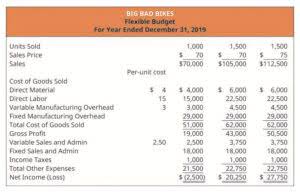
By adopting effective customer management practices, you can ensure timely order fulfillment and enhance customer satisfaction with their purchases. Prevent surplus materials by implementing inventory tracking to avoid overproduction. Properly training your employees to reduce product defects is crucial. Also, ordering only the necessary direct materials for production is important. A practical approach to achieving this is by exploring alternative suppliers to source materials at a more affordable price.
Generally, companies consider different factors while determining the selling price for their products keeping in view all the fixed and variable expenses. It’s inevitable that the volume of output will increase or decrease with varying levels of production. The quantities involved are usually significant enough to evaluate changes in cost. An increase or decrease in the volume of goods produced translates to costs of goods manufactured (COGM). To determine the change in costs, simply deduct the production costs incurred during the first output run from the production costs in the next batch when output has increased.