
|
The administration also reported that the country had surpassed its all-time high for permanent resident landings in a single year. The only other occasion Canada reached the 400,000-immigrant mark was in 1913, but the outbreak of World War I caused a decline in immigration in the years that followed. Canada believes that more immigration would promote economic development and alleviate a deteriorating post-pandemic labour shortage, but new migrants may add fuel to a red-hot property market that the central bank has warned has been fueled by a "sudden flood of investors." Canada's successive governments have depended on immigration to promote economic development. With the epidemic forcing aged Canadians to retire early, in the face of a dwindling fertility rate, which reached a record low last year, luring immigrants has become increasingly crucial. Furthermore, the government seeks high-skilled immigrants who bring in money and earn enough to compete for preferred homes. "Canada needs immigration to create jobs and drive our economic recovery," said Immigration Minister Sean Fraser, according to Reuters. "It's not simply that one in every three Canadian firms is established by an immigrant, along with those newcomers are also helping to address labour shortages."
0 Comments
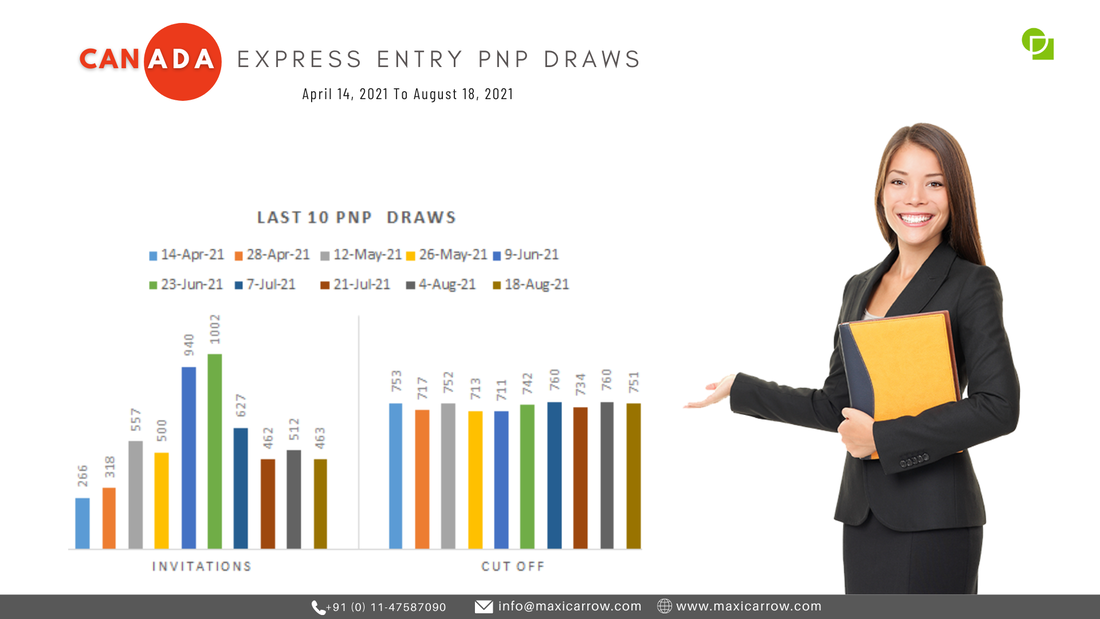
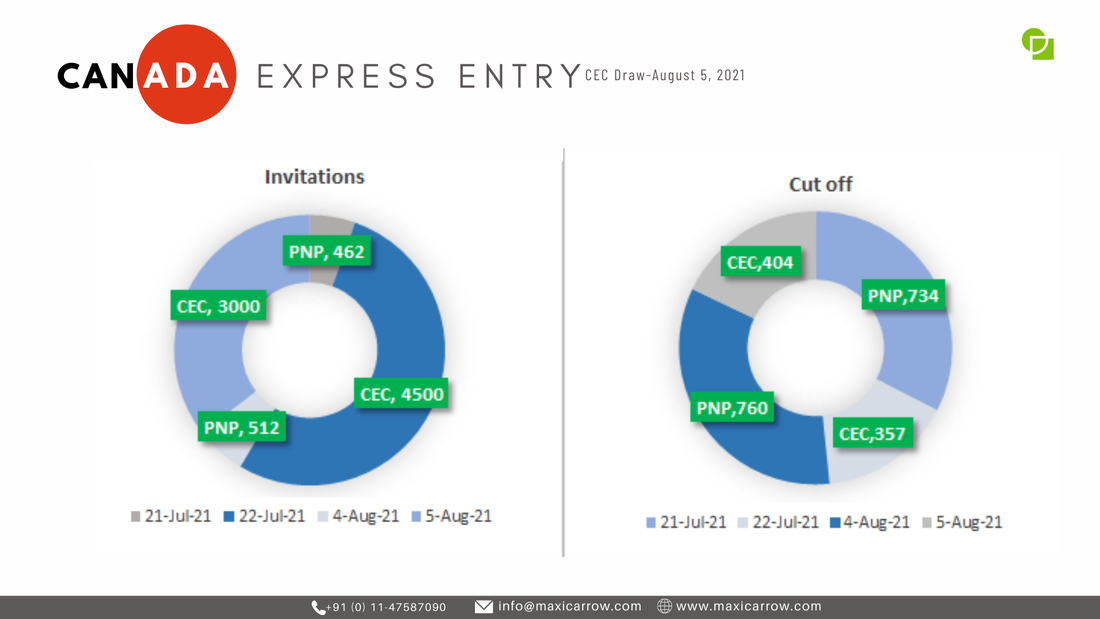
 Every year, over 400,000 new permanent residents arrive in Canada, with around 90,000 of them being Indian nationals. Because of their English language fluency, professional job experience, and high levels of education, Indians are Canada's top supplier of global talent. In the year 2020, despite the fact that the number of applicants invited from India fell to 10%, down from 18% in the previous year, there were still more candidates invited from India than from any other foreign country. India was also the most prevalent citizenship nation among individuals who acquired ITAs, followed by China, Nigeria, Pakistan, and the United Kingdom. Canada, IRCC invited 746 Express Entry applicants to apply for permanent residence on December 22. All of the candidates who were invited should have already been nominated through a Provincial Nominee Program (PNP). The cut-off (CRS) rose this time to 720. IRCC invited record breaking 1032 applicants with scores of at least 698 in the previous draw. While announcing that the Atlantic Immigration Pilot will become a permanent program in 2022, Immigration Minister Sean Fraser stated that Canada would return to admitting immigrants from both within and outside the country. We can anticipate that as we move forward, we will have a healthy mix of professionals who are already in Canada and have some experience in Canada, as well as other professionals who may not yet be here but will soon come to Canada. Book a free consultation from our experts! Expansion in immigration pathways should be the key priority to alleviate labour shortage in Canada.17/12/2021 The pandemic has aggravated Canada's long-standing labour shortages, and there is no easy remedy. In this context Trudeau unveils Canada's new immigration system priorities. According to the Canadian Federation of Independent Business (CFIB), labour shortages affect more than half of small Canadian organizations. These organizations may have been understaffed as a result of challenges in finding, retaining, or getting employees to work the required hours. As a result of these labour shortages, over one-third of firms reported cancelling or delaying projects, as well as rejecting down contracts and sales, in June. Additionally, the firms that report they have enough employees, but at a major additional expense owing to salary hikes, flexible hours, or recruiting bonuses, among other things. According to the CFIB, raising wages is not the solution because higher wages imply higher labour costs, which drive up prices and create inflationary pressure.  Finally, in order to overcome its labour shortages, Canada must tap into as many talent sources as possible, both in the short and long term. Canada now has over 1 million job openings and will continue to have labour market shortages as the country's 9 million baby boomers reach retirement age during the next decade. Since the 1990s, Canada's working-age population has been dropping, and future predictions predict that trend will continue. If nothing changes, Canada will have lost a huge portion of its working-age population by 2050. Addressing labour shortages will need a series of activities over a longer period of time. Improving in automation processes and enhancing the TFWP, may be done in the near run. The more focus must be on the long run labour shortages. This means that governments and businesses must do a better job of determining ways to link under-represented employment groups, newcomers in general, Indigenous peoples, people with disabilities, disenfranchised youth, and others, with relevant work opportunities. Governments have a role to play in alleviating labour shortages, solutions mostly lie with businesses improving salaries and training. But one solution is to expand immigration pathways for skilles workers either temporary or permanent – outside of Canada. Immigration programs can help businesses to overcome the labour shortages. Immigration programs aims to bring more employees into Canada more quickly while also ensuring a suitable fit between immigrants and the roles they fill. A better Immigration Program would be more accessible to a larger range of talents and industries, and would provide additional avenues to permanent residency. Canadian government should focus on increasing the number of pathways available to international worker, international students and temporary foreign workers via Express Entry. As evident Canada has a big shortage of nurses across the country. In this context NDP leader Mr. Jagdeep Singh and MP Jenny Kwan and some nurses trained overseas held a video conference to call on the Immigration Minister to speed up the processing of immigration applications filed by international trained nurses whose professional credentials have been accredited in Canada. Jenny Kwan said that shortage and overworking of nurses can cause harm to patient, delay surgeries and increased wait times. So, the liberal govt must increase resources to address the issue and grant permanent residency to qualified nurses.  Canada, Most of the ITAs has been issued by IRCC to PNP candidates this year. Here is another round of invitations held on Thursday, November 24, 2021. in this draw Total 613 PNP candidates has been invited to apply for Permanent Residence. Since beginning of the year 2021 Canada has now held 22 Express Entry draws just for PNP candidates. This was the 6th PNP specific draw in the row. PNP draws (CRS) since January 6, 2021 has ranged from the low 813 to 685 till previous draw held on November 10.  As per our experts’ prediction, most awaited FSW draw is likely to come on December 8, 2021. The probability of it happening on this day is currently 13%. Get your application prepared, book a free consultation session with us. On a very first day of appointing Cabinet’s new immigration minister IRCC Canada conducted another large PNP draw of this year, this was 4th consecutive draw in the row to invite PNP candidates. Total 888 Express Entry candidates to apply for permanent residence in the draw held on October 27, 2021. CRS cutoff for the invited candidates goes to 744 which includes the applications supported with Provincial Nomination hence awarded 600 additional points against the same. Applications without nomination, the lowest-scoring candidates would only have scores of 144. Throughout the COVID-19 pandemic, Canada has been holding Express Entry draws for PNP and Canadian Experience Class (CEC) candidates. Over the past one and half month IRCC has not issued the draw for CEC Candidates.  Even with decreased number of invitations issued this month, Canada has still invited a record number of Express Entry candidates this year. So far in 2021, Canada has invited 111,265 Express Entry candidate to apply for permanent residence. Last year, Canada invited a grand total of 107,350 immigration candidates, a record at the time. Let’s see how the new immigration minister Mr. Sean Fraser gives the new curve to Canada immigration system. Get the right consultation from a right consultant now, please contact us: Employment opportunities has started to emerge in Canada, and unemployment is decreasing, providing potential immigrants with several chances to resettle under the country's economic immigration policies. Unemployment rate has decreased for last few months in a row. In September it has dropped to the lowest level since the pandemic began to 6.9 percent, as more employees returned to the working population. Public & Private sectors both have seen a boom. Growth in employment can be seen in Manufacturing, administration and service sectors. Hotel and restaurants continue to show fall in generation of employment opportunities.  IRCC invited 681 Provincial Nominee Program (PNP) candidates with the Comprehensive Ranking Score (CRS) of at least 720 to apply for permanent residence on October 13, 2021. During the pandemic, border restrictions restricted immigration to Canada. Permanent immigration has decreased from almost 284,200 last year to approximately 226,200 this year. IRCC has held bi-weekly Express Entry draws throughout the year, inviting only PNP and Canadian Experience Class (CEC) candidates. Although international migration has not yet recovered to pre-pandemic levels, some indications of recovery have been observed since the beginning of 2021.
|
Maxic ArrowRecent Blogs' Diary Archives
July 2026
Categories
All
|


 RSS Feed